UCD Charles Institute

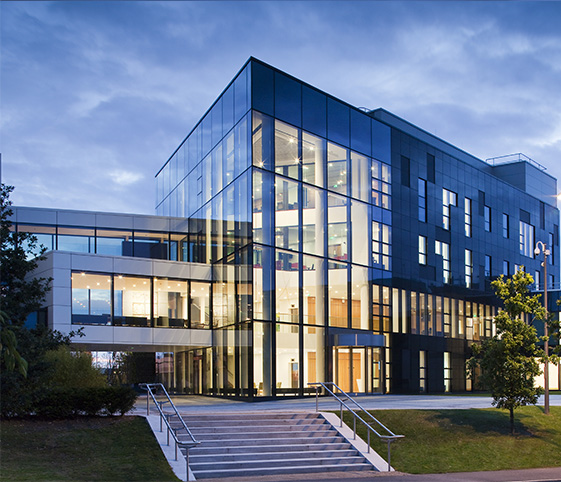
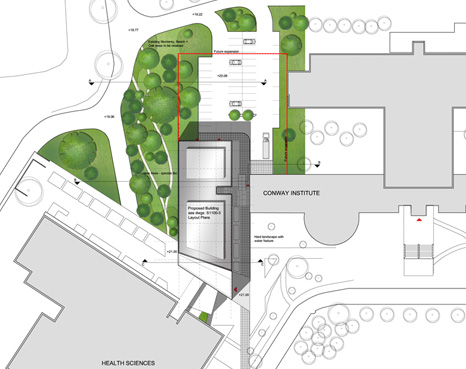
The UCD Charles Institute of Dermatology is located between two prominent buildings at University College Dublin: the UCD Conway Institute of Biomolecular and Biomedical Research on one side and the UCD Health Sciences Library on the other. As an Academic Centre within Ireland’s largest School of Medicine, it holds a unique position, both physically and intellectually. This environment—rich in academic and scientific essence—inspired a thoughtful and purposeful design strategy.
The architectural concept was shaped by a combination of urban, environmental, and abstract considerations, aiming to harmonize scientific purpose with architectural form. During my time at RKD Architects in 2008, I had the opportunity to work on the design of the Charles Institute, collaborating with a talented team to develop the conceptual framework. We focused on addressing both the practical needs and philosophical ideas that would ensure the design remained rooted in the dynamic academic environment of the site.

Everything exists in context and is shaped by it. This idea is fundamental to how we perceive and interact with the world. Whether in nature, art, or architecture, every entity either complements its surroundings or boldly stands out, asserting its own identity. Some forms blend harmoniously, while others challenge the environment, creating a deliberate contrast.
In architecture, this dynamic relationship is especially important. Context-driven design seeks to uncover the qualities and forces that define a space, translating them into forms that meet both spatial and functional needs. By emphasizing connectivity and harmony, this approach not only enhances usability and comfort but also fosters a sense of cohesion and purpose. It guards against fragmentation, helping to prevent spatial disorder and creating environments that naturally promote well-being.
Everything exists in context and is shaped by it. This idea is fundamental to how we perceive and interact with the world. Whether in nature, art, or architecture, every entity either complements its surroundings or boldly stands out, asserting its own identity. Some forms blend harmoniously, while others challenge the environment, creating a deliberate contrast.
In architecture, this dynamic relationship is especially important. Context-driven design seeks to uncover the qualities and forces that define a space, translating them into forms that meet both spatial and functional needs. By emphasizing connectivity and harmony, this approach not only enhances usability and comfort but also fosters a sense of cohesion and purpose. It guards against fragmentation, helping to prevent spatial disorder and creating environments that naturally promote well-being.
The concept behind the Charles Institute was to create a scientific hub that truly reflects its unique position within the University College Dublin campus. Positioned between the Conway Institute and the Health Sciences Library, it wasn’t just about creating a physical connection but also a metaphorical bridge—linking academic research, education, and public engagement into one unified space.
This idea of being both a connector and an independent entity guided our design approach. We aimed to create a building that not only integrates scientific functions but also symbolizes collaboration and knowledge exchange. By blending its scientific purpose with architectural form, the Charles Institute becomes a place where innovation, education, and community naturally come together.
A building’s skin is more than just an exterior – it’s the essence of its presence. In architecture, the outer layer serves both an aesthetic and functional purpose, constantly balancing between form and function. This dynamic interplay can be seen as an endless loop: Form follows Function follows Form, creating a continuous cycle where one informs the other.
Just like the skin of living organisms, architectural skin must be both flexible and adaptive, responding to changing conditions while maintaining coherence. In this sense, an ideal architectural skin behaves like a dynamic system—a pattern that adjusts to its environment. It is not static but rather a living, responsive surface shaped by local conditions, where each element adapts in subtle yet meaningful ways.
This parametric approach allows the skin to breathe, move, and transform, much like a natural organism. The resulting patterns reflect both stability and change, forming a visual language that resonates with the environment while upholding the building’s identity.
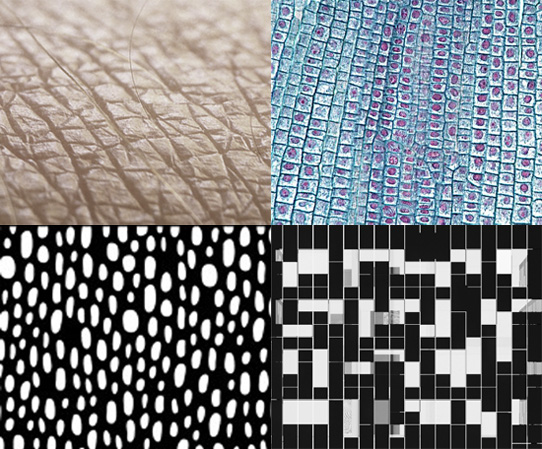
A building’s skin is more than just an exterior – it’s the essence of its presence. In architecture, the outer layer serves both an aesthetic and functional purpose, constantly balancing between form and function. This dynamic interplay can be seen as an endless loop: Form follows Function follows Form, creating a continuous cycle where one informs the other.
Just like the skin of living organisms, architectural skin must be both flexible and adaptive, responding to changing conditions while maintaining coherence. In this sense, an ideal architectural skin behaves like a dynamic system—a pattern that adjusts to its environment. It is not static but rather a living, responsive surface shaped by local conditions, where each element adapts in subtle yet meaningful ways.
This parametric approach allows the skin to breathe, move, and transform, much like a natural organism. The resulting patterns reflect both stability and change, forming a visual language that resonates with the environment while upholding the building’s identity.
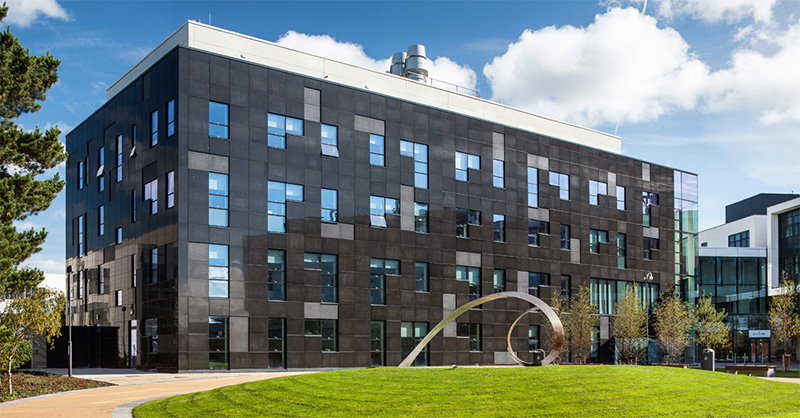
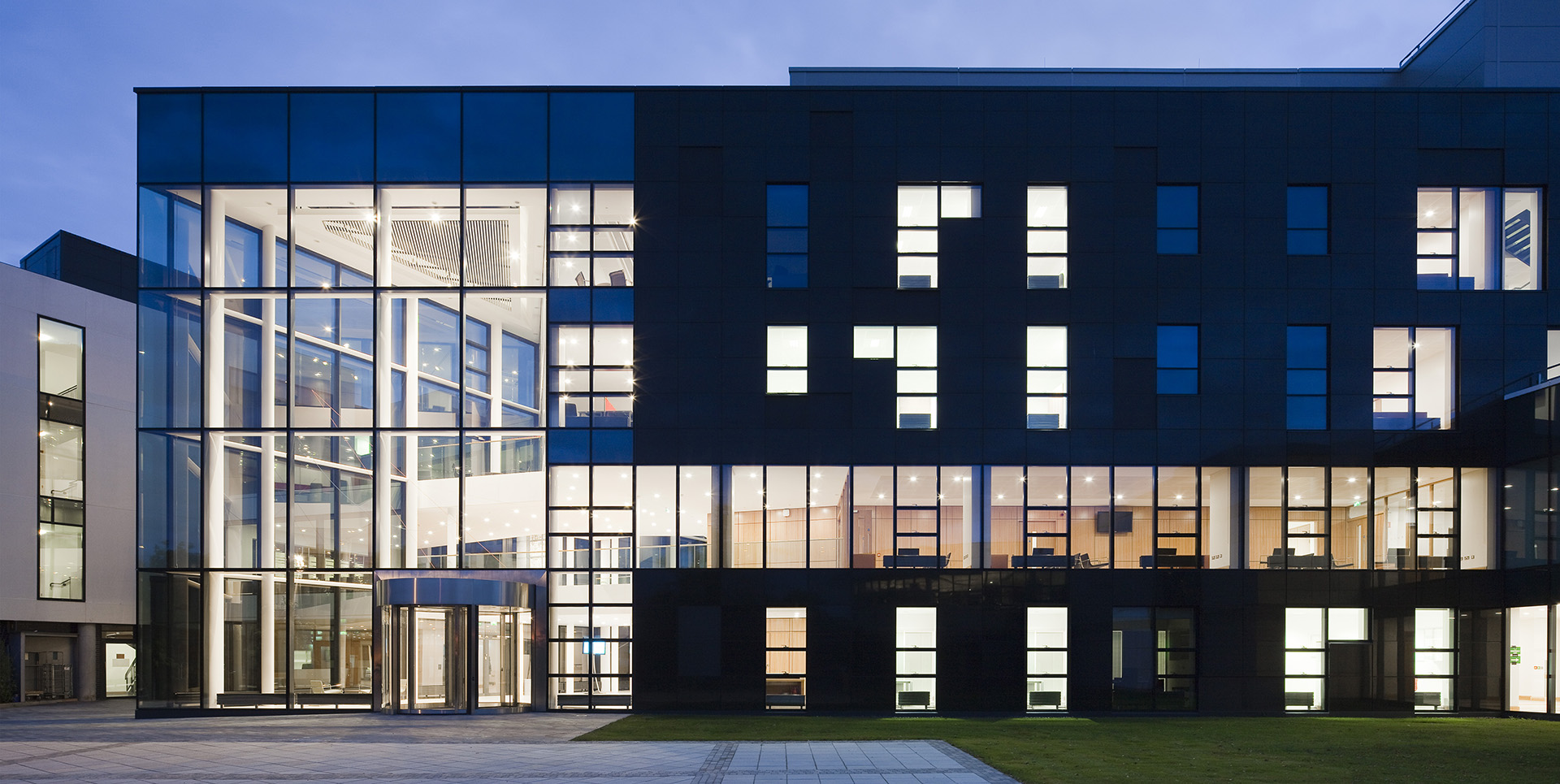
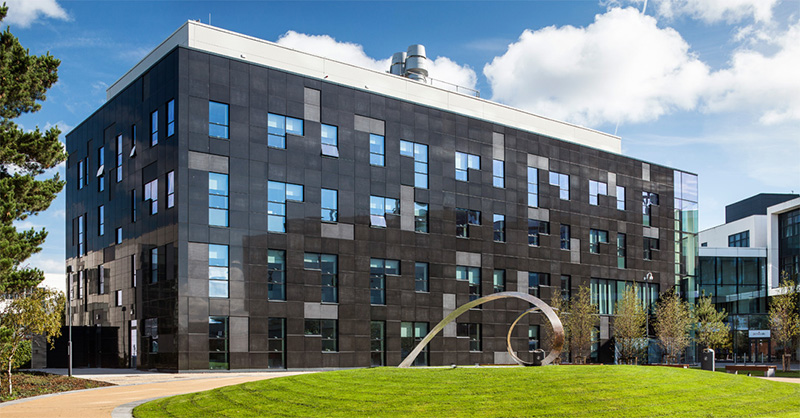
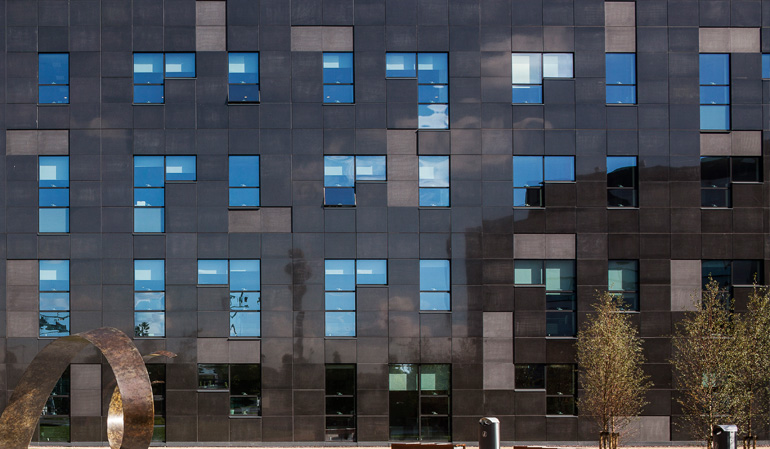
We wanted the elevation treatment of the building to feel dynamic and adaptive – something that would respond to its surroundings while maintaining a sense of purpose and balance. We designed the facade using a mix of solid and transparent square surfaces, creating a pattern that might seem random at first glance but is carefully crafted to balance light, privacy, and openness.
Our idea was to make the facade responsive to its environment, with the density of elements varying based on local conditions. This approach allows the building to adapt to changing needs, while still presenting a coherent and context-sensitive appearance. The pattern captures a moment of movement, reflecting how the building can be both stable and flexible at the same time.
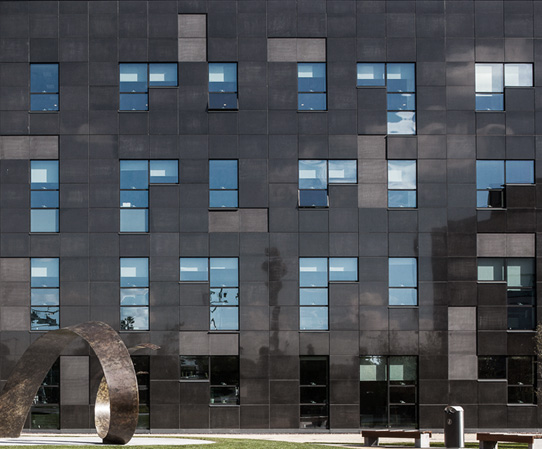
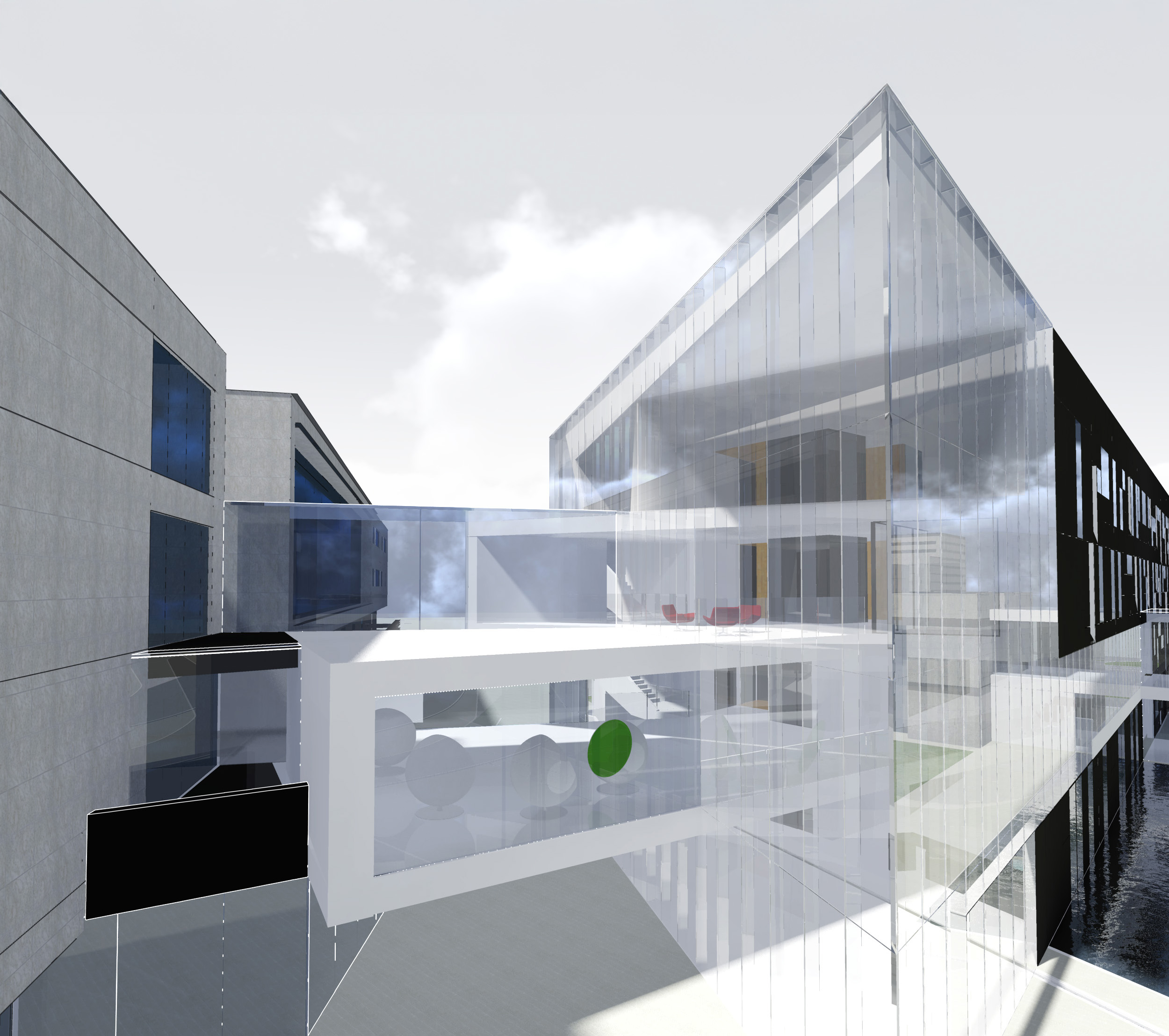
We saw the LINK and its context as part of a perpetual feedback loop — each one shaping and enhancing the other. This continuous cycle inspired the looping form of the LINK, symbolizing the ongoing flow of ideas and connections within UCD’s scientific research networks.
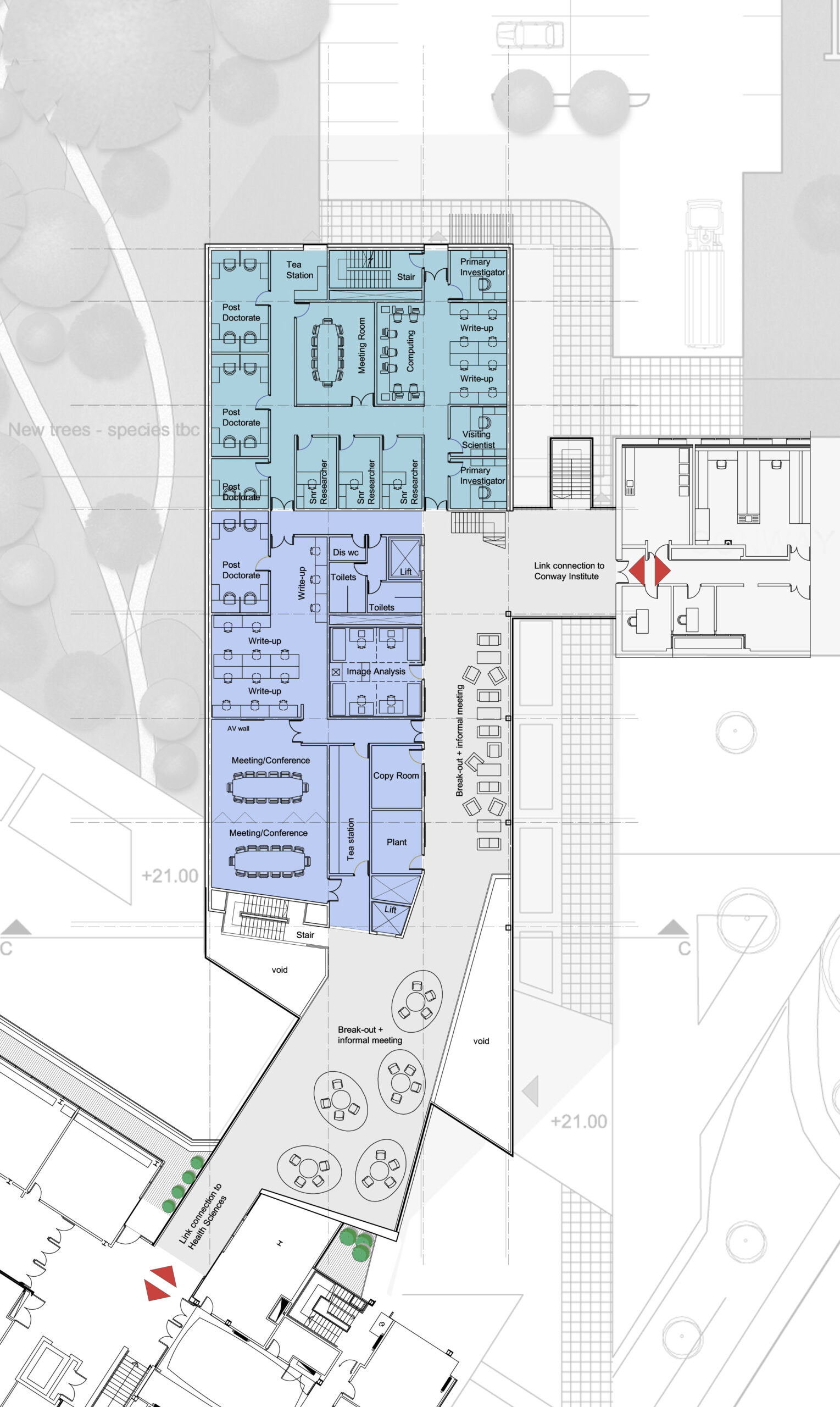
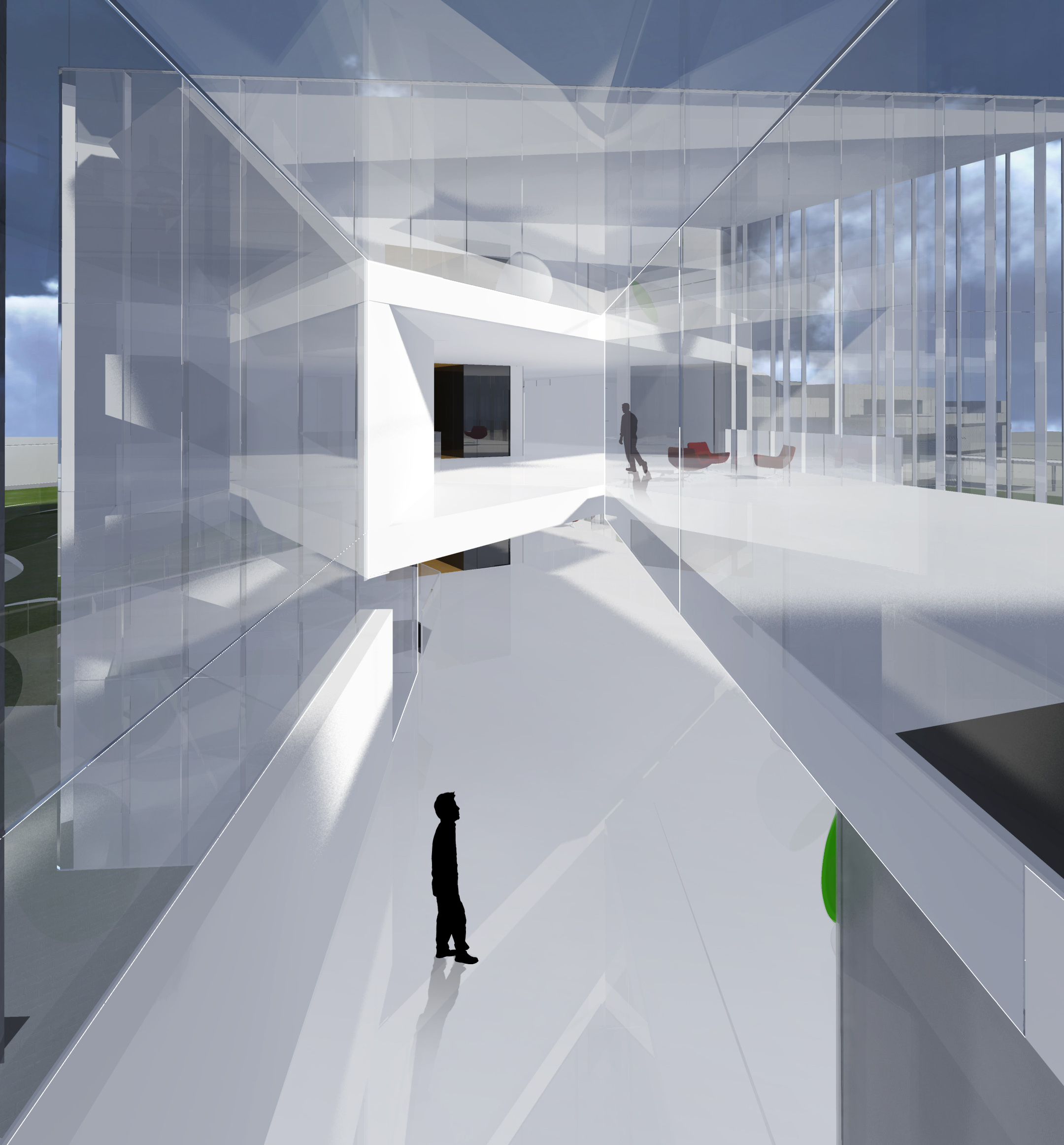
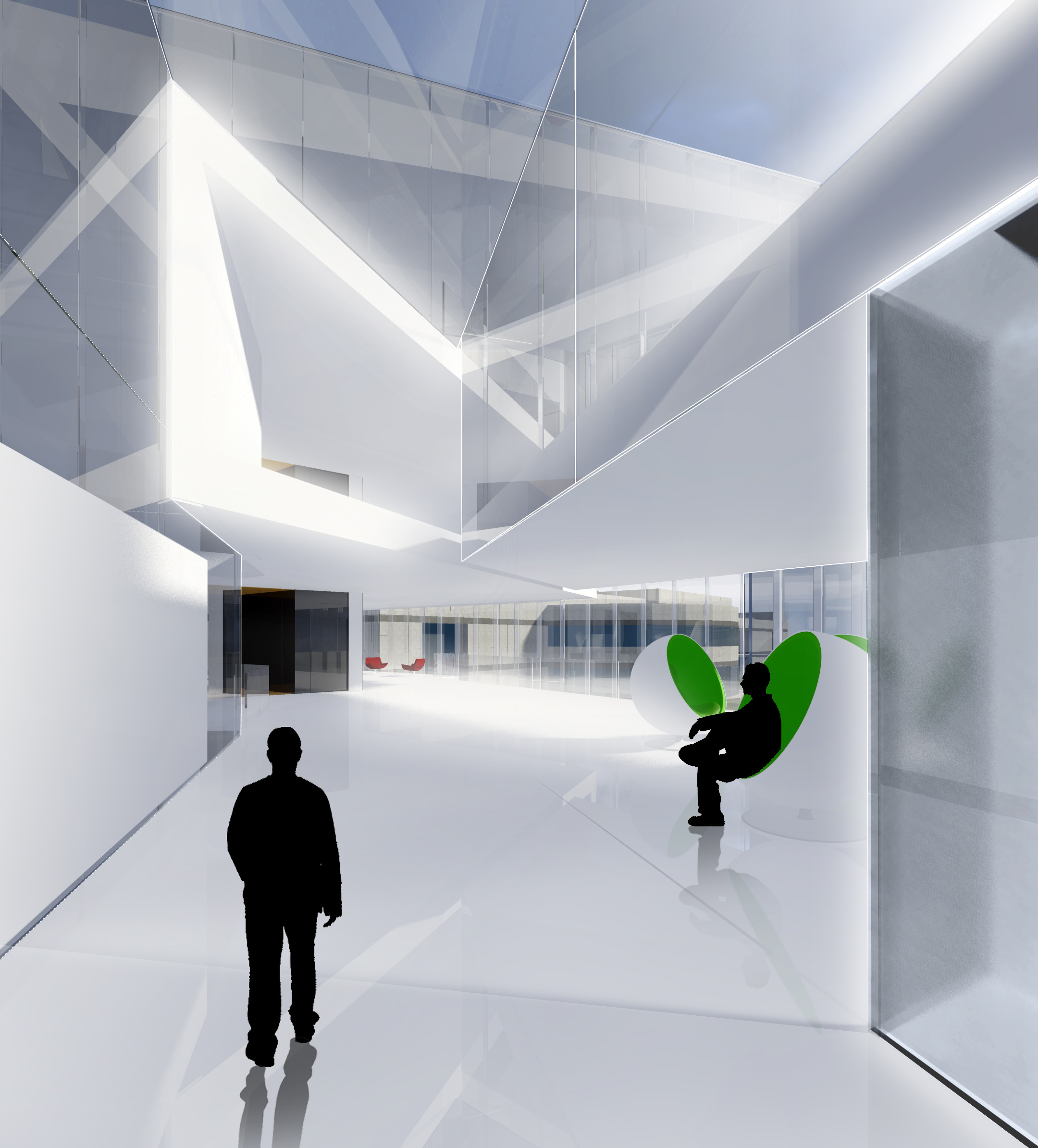
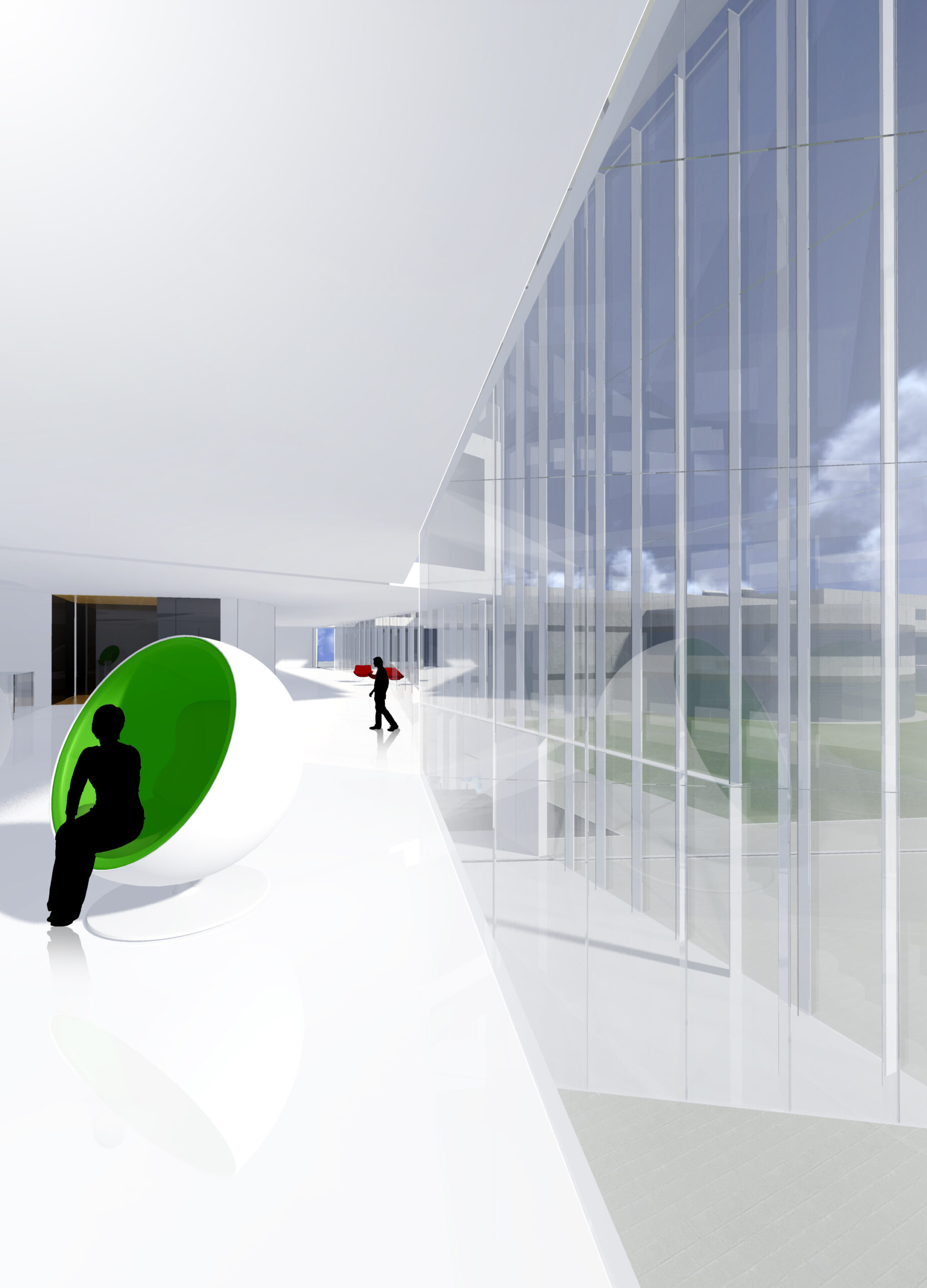
Our idea was to make this concept tangible through the looped architectural form, which not only captures the dynamic nature of collaboration but also creates a vibrant collision space. Positioned just off the link circulation on the atrium’s first level, this space was designed to encourage spontaneous interactions among students, researchers, and scientists. It’s a place where casual exchanges of ideas happen naturally, fostering a spirit of collaboration and reflection within the academic environment.
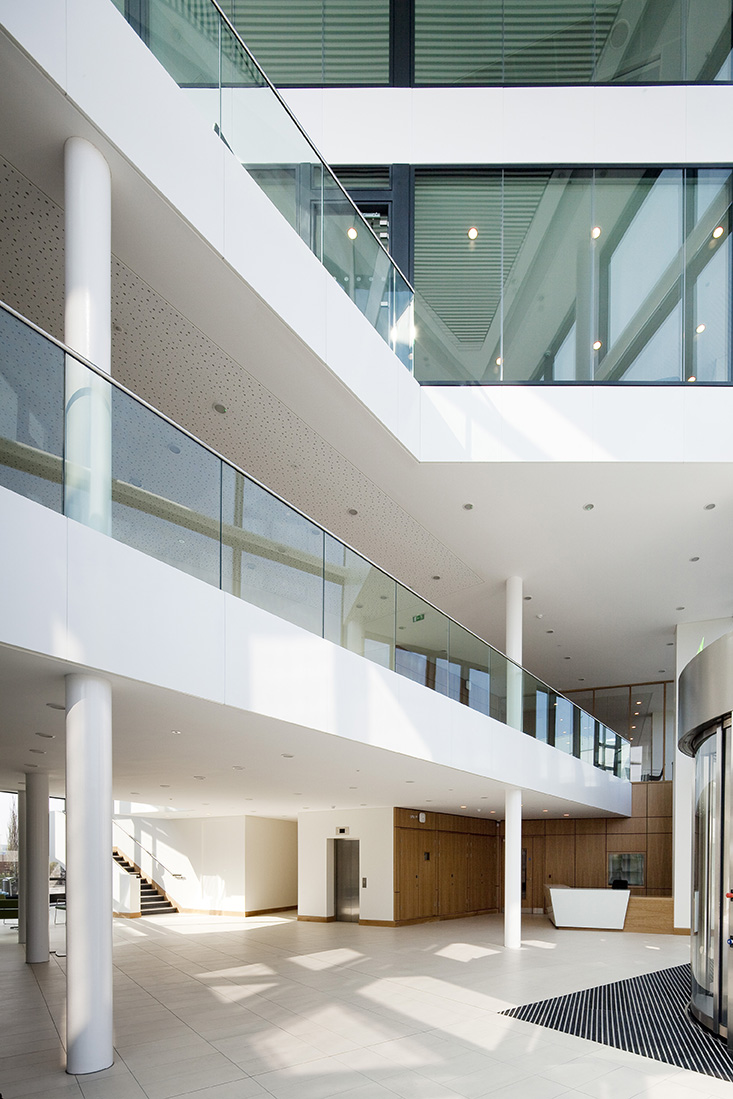
We saw the LINK and its context as part of a perpetual feedback loop — each one shaping and enhancing the other. This continuous cycle inspired the looping form of the LINK, symbolizing the ongoing flow of ideas and connections within UCD’s scientific research networks.
Our idea was to make this concept tangible through the looped architectural form, which not only captures the dynamic nature of collaboration but also creates a vibrant collision space. Positioned just off the link circulation on the atrium’s first level, this space was designed to encourage spontaneous interactions among students, researchers, and scientists. It’s a place where casual exchanges of ideas happen naturally, fostering a spirit of collaboration and reflection within the academic environment.
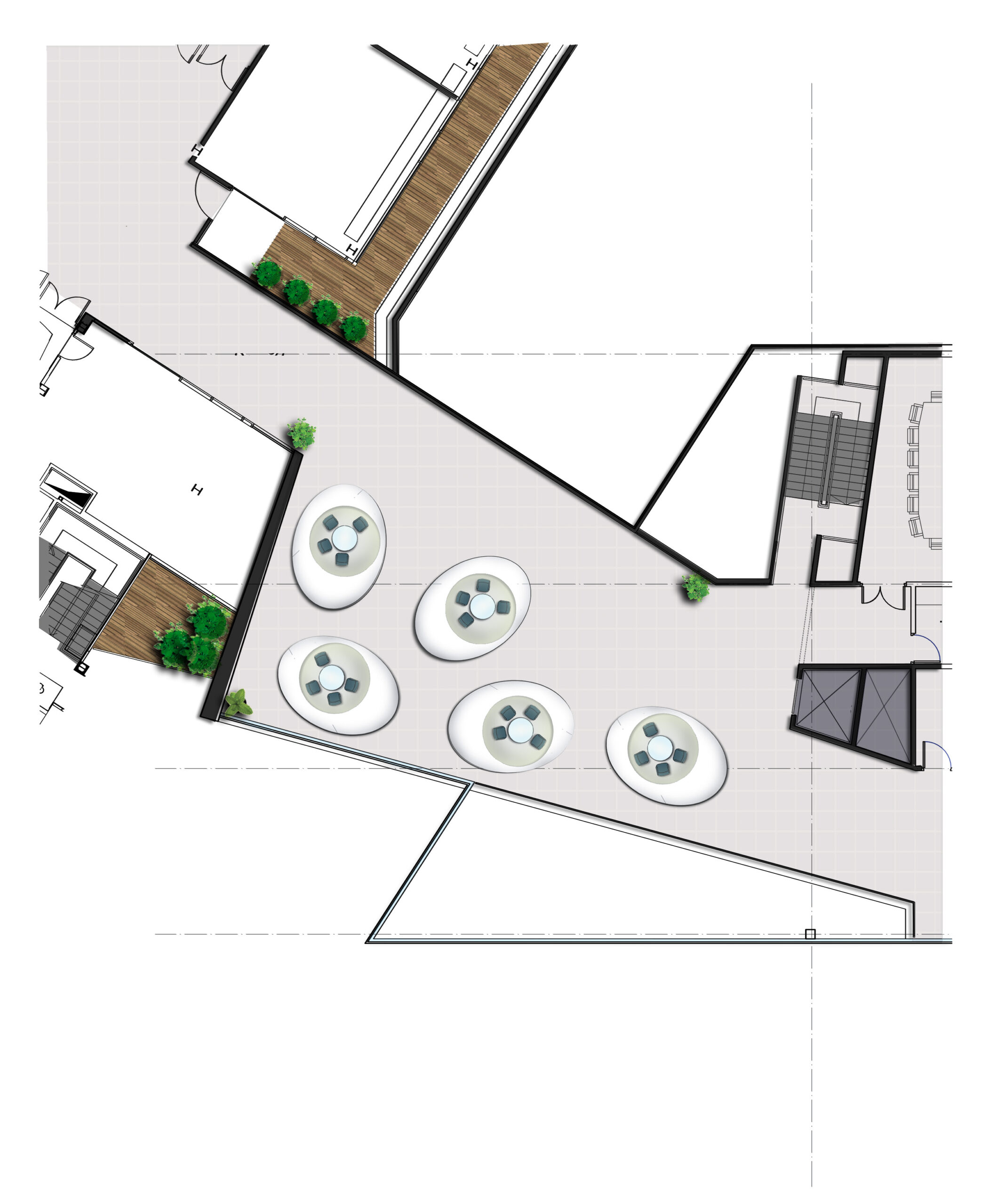
LINK: We believe that everything in the world is interconnected — no entity truly exists in isolation. Sometimes, the context itself demands growth and expansion, creating the need for a new, interconnected space. This pressure to evolve arises when the existing capacity is no longer enough, prompting the creation of a new entity — a LINK.
For the Charles Institute of Dermatology, the LINK wasn’t just something we designed — it was something we discovered as we considered UCD’s ongoing academic achievements and the need for modern facilities. Positioned between two key research hubs, the Charles Institute naturally intertwines with its neighbours, much like how entities in nature evolve together to thrive.
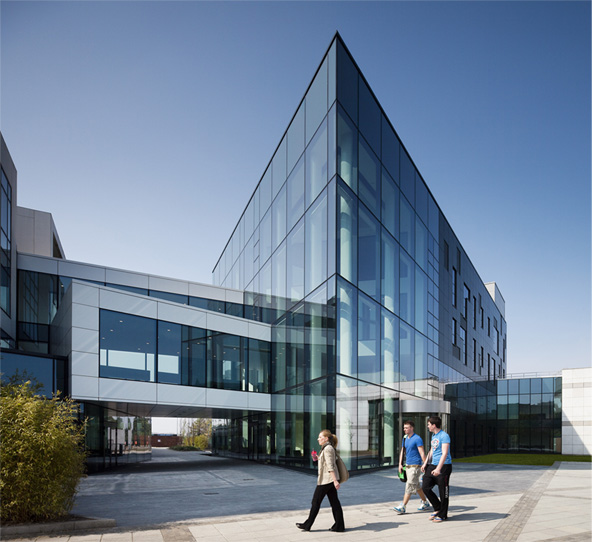
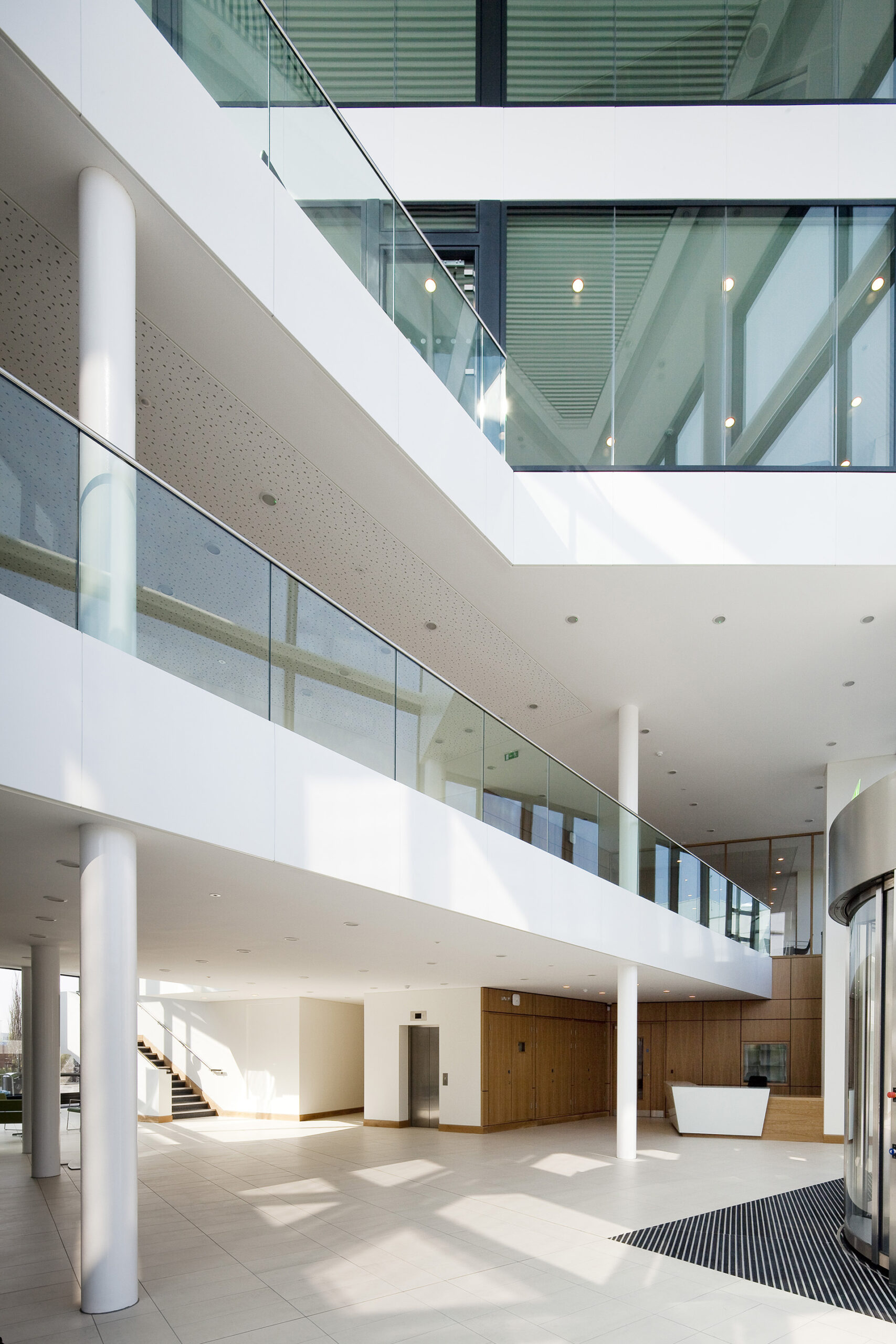
The Charles Institute physically embodies this idea of connection through its corridor-like structure — a tangible pathway that shortens travel distances and improves circulation efficiency. But the LINK goes beyond the physical — it’s a symbol of progress, fostering the exchange of ideas, knowledge, and research. It’s a bridge to the future, where linking spaces becomes a metaphor for academic collaboration and innovation.
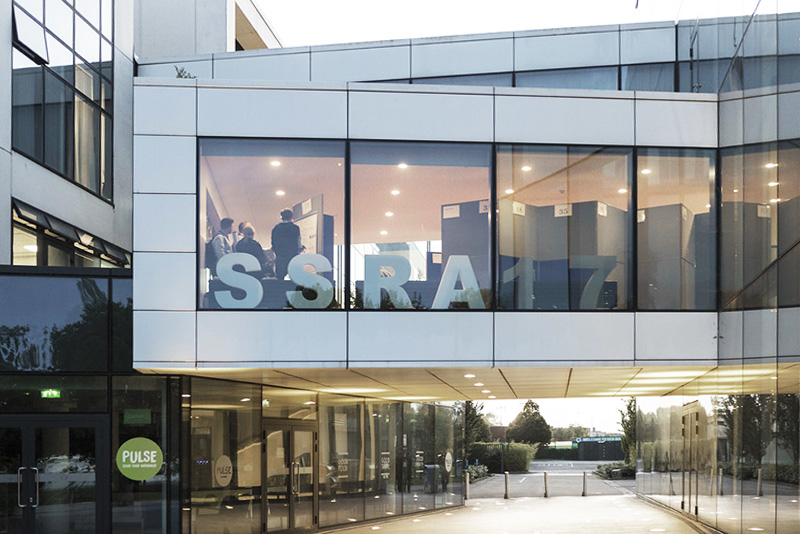
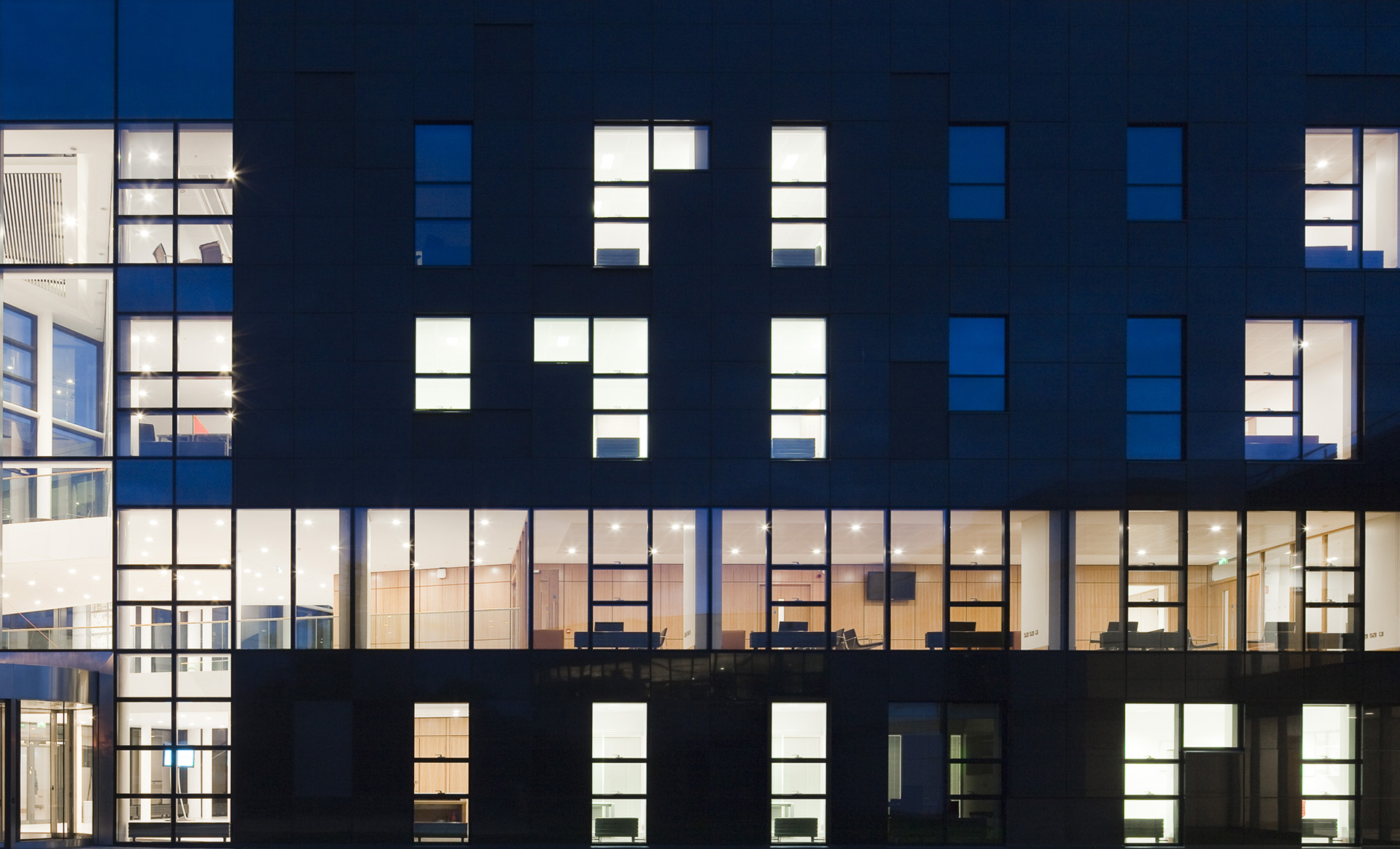
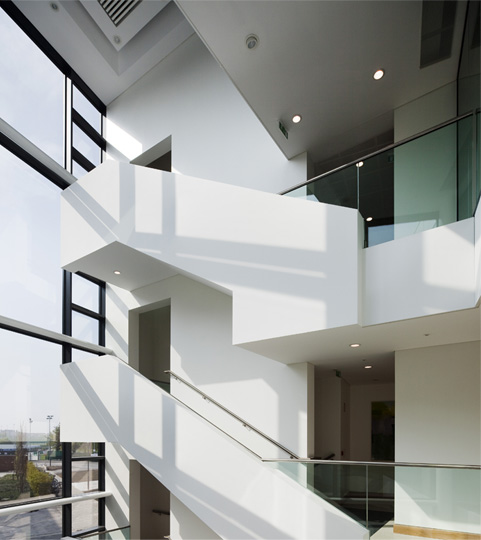
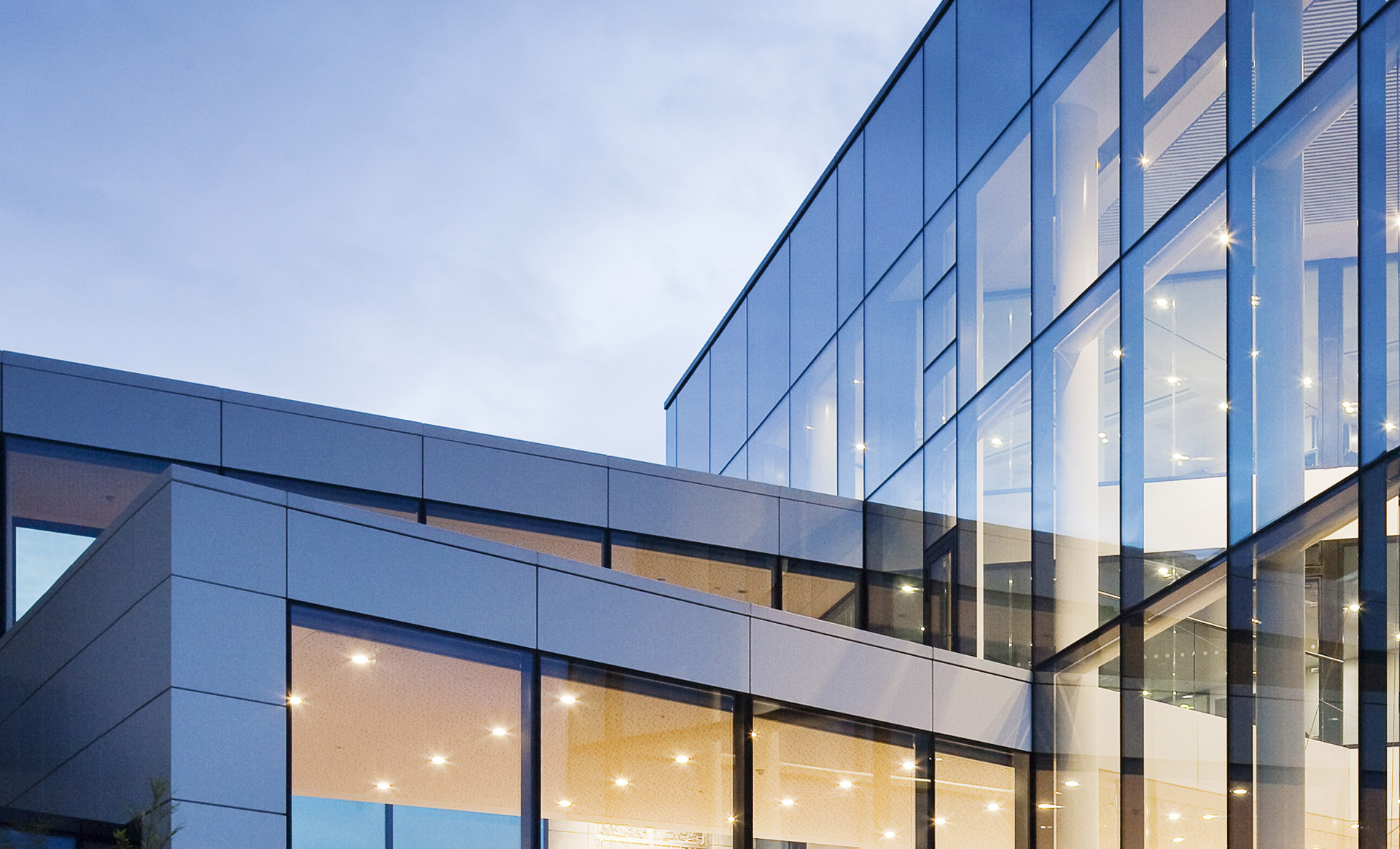
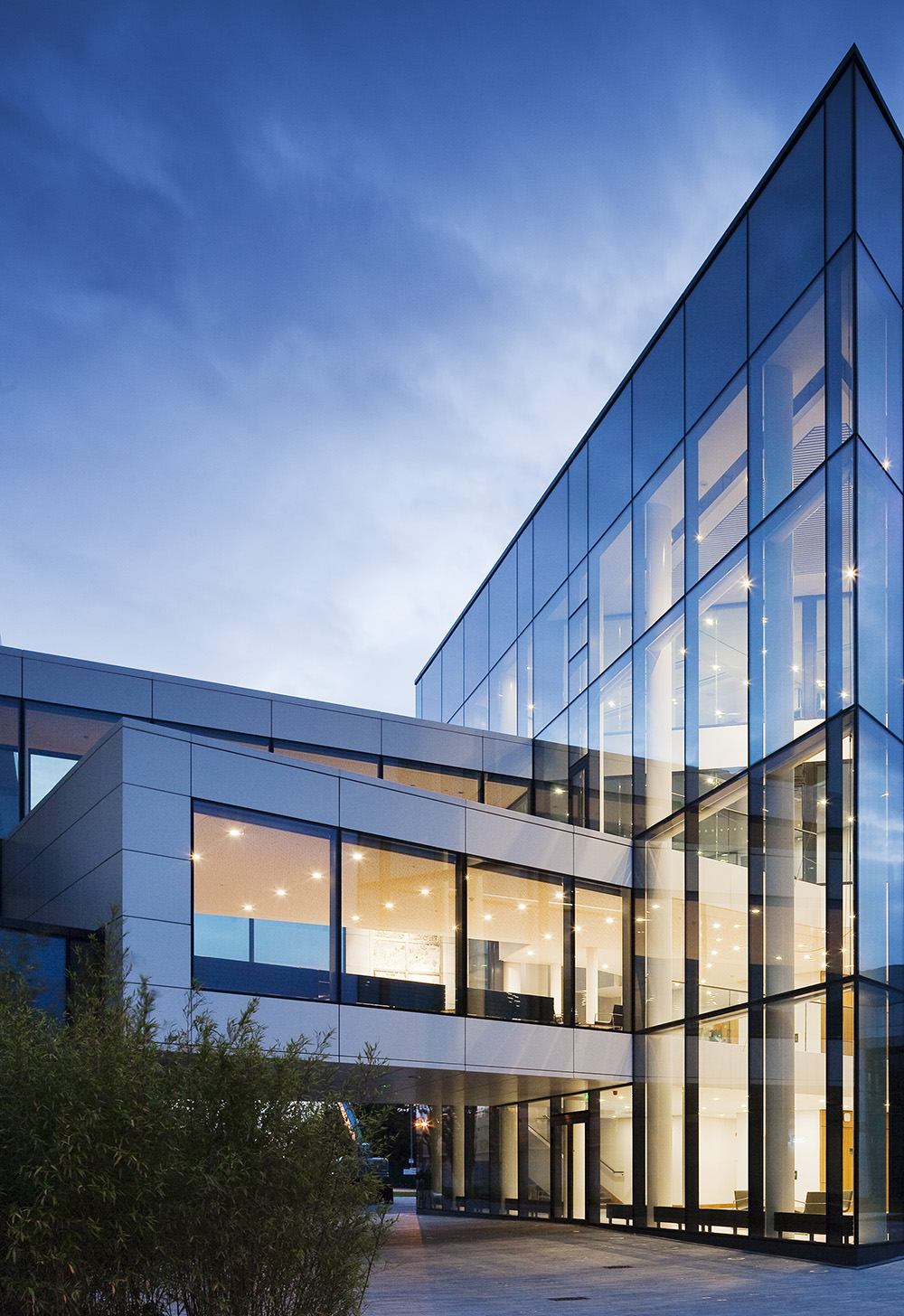
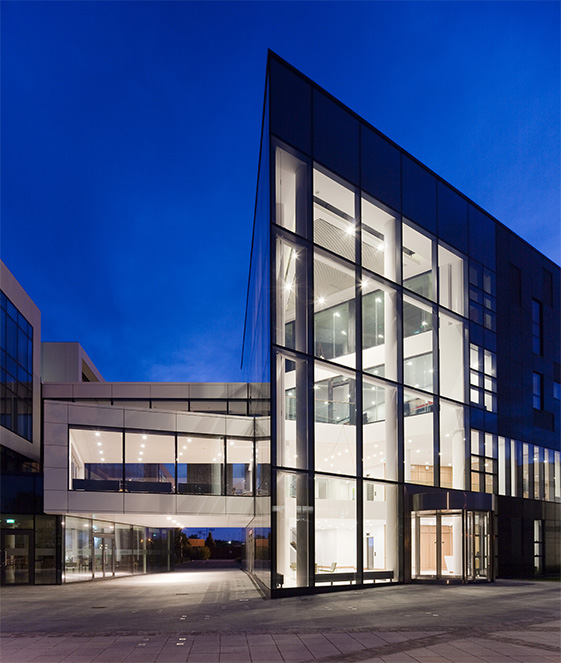
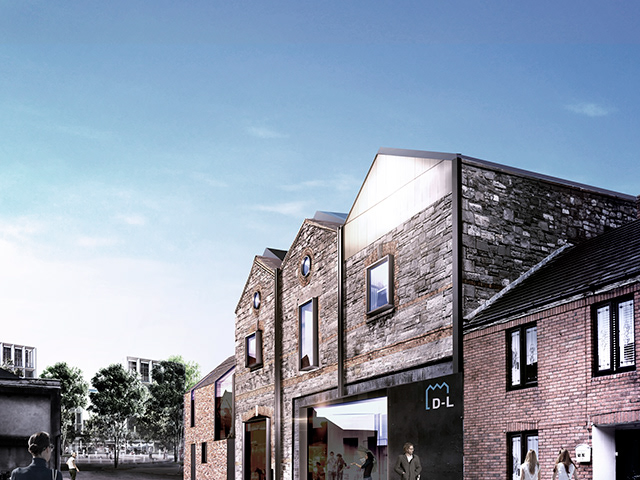
The final design features a refined black stone façade, punctuated with a randomized array of windows. This robust stone exterior acts as a protective shield for the research facilities, while a transparent glazed atrium—serving as both a seating area and circulation link—reveals the building’s inner dynamics.
The architectural approach embraces abstract thinking, not by merely echoing existing styles, but by translating concepts into spatial form. The design draws inspiration from bio-shapes, connections, symbiosis, and cycles, resulting in a dynamic yet cohesive randomness on the façade. This adaptive pattern hints at malleability and responsiveness, much like the internal systems of a living organism.
Visually, the façade represents the relationship between the building’s protective shell and the complex inner workings, seamlessly connecting the new facility with its surroundings. This fluid transition between spaces symbolizes the ongoing cycle of knowledge advancement, emphasizing the idea that everything is interconnected—no entity exists in isolation.

everything is linked nothing is selfsustained